
Article 9: CMMC 2.0 Is Quietly Reshaping the Defense Industrial Base
Series: Understanding the Business Impact of CMMC 2.0 (2025–2026)
This article is part of a multi part commentary series examining how Cybersecurity Maturity Model Certification 2.0 (CMMC 2.0) reshapes long term operating models within the defense industrial base. The series is derived from a broader analytical paper addressing the business impact of CMMC 2.0.
CMMC 2.0 is frequently discussed as an organizational readiness challenge. When viewed in aggregate, its effects are structural. Eligibility requirements, applied consistently, alter who can compete and how supply chains form.
Organizations with certification or credible readiness retain access to federal defense work. Organizations without it experience narrowing opportunity sets. Over time, this dynamic stratifies the market.
Careful readers may recognize the figure below from earlier articles in this series. Its reuse is intentional. Previously, the figure illustrated assessment mechanics, organizational failure modes, remediation priorities, and institutionalization. In this context, it highlights industry level impact. Sustained alignment across governance, workforce, documentation, and execution influences market participation and supplier viability.
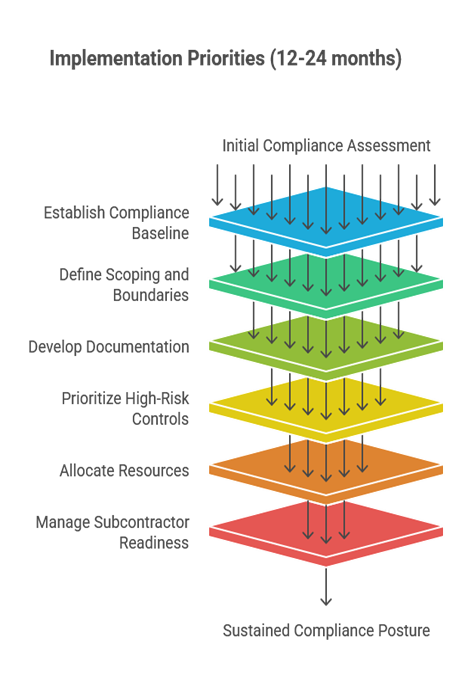
Figure: Market participation increasingly depends on sustained organizational alignment under CMMC 2.0.
Supply chain concentration introduces tradeoffs. Reduced diversity can simplify compliance management but elevate cost and risk. These effects unfold gradually rather than immediately.
CMMC 2.0 does not aim to restructure the defense industrial base, but its incentives make restructuring inevitable. Organizations that understand this dynamic make deliberate choices about where and how they compete.
The key to success is to remember: under CMMC 2.0, compliance is a market force (and lack of compliance equates to lack of market access).