
Article 8: CMMC 2.0 Will Reward Institutionalization, Not One-Time Compliance
Series: Understanding the Business Impact of CMMC 2.0 (2025–2026)
This article is part of a multi part commentary series examining how Cybersecurity Maturity Model Certification 2.0 reshapes long term operating models within the defense industrial base. The series is derived from a broader analytical paper addressing the business impact of CMMC 2.0.
CMMC 2.0 is often treated as a milestone to be achieved rather than a capability to be sustained. That framing leads organizations to focus on assessment preparation rather than operational consistency.
Sustained compliance requires institutionalization. Controls must be embedded into daily operations, supported by documented procedures, and reinforced through training and oversight. When compliance is treated as episodic, alignment degrades between assessments.
Workforce continuity plays a central role. Turnover and role rotation introduce risk when compliance depends on individual knowledge rather than institutional practice. Organizations that codify expectations and reinforce them through training maintain consistency despite personnel changes.
Careful readers may recognize the figure below from earlier articles in this series. Its reuse here is intentional. In earlier discussions, the figure illustrated assessment behavior, organizational failure modes, and remediation priorities. In this context, it highlights why institutionalization matters. Sustained alignment across governance, workforce, documentation, and execution determines whether compliance endures beyond a single assessment cycle.
Though the figure below has appeared in earlier articles in this series, its reuse here is intentional. In this context, Figure 1 illustrates why long-term success under CMMC 2.0 depends on institutionalization rather than episodic compliance. Governance, workforce continuity, documentation discipline, and operational execution must remain aligned over time.
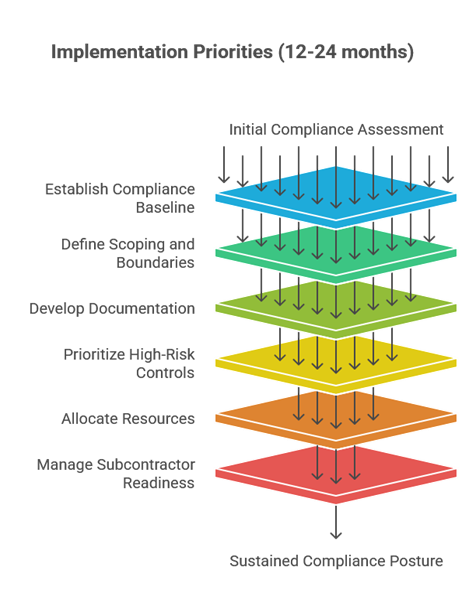
Figure: Treating CMMC as a strategic capability enables access and flexibility in competitive environments.
Organizations that institutionalize compliance experience more predictable cost structures and reduced disruption. Leadership oversight focuses on execution quality rather than crisis response. Cultural alignment reinforces expected behavior.
CMMC 2.0 does not reward those who pass once. It rewards those who operate consistently.