
Article 4: CMMC 2.0 Assessments Are Not Audits in Name Only
Series: Understanding the Business Impact of CMMC 2.0 (2025–2026)
This article is part of a multi part commentary series examining how Cybersecurity Maturity Model Certification (CMMC) 2.0 reshapes assessment behavior and enforcement outcomes within the defense industrial base. The series is derived from a broader analytical paper addressing eligibility, accountability, and verification under CMMC.
CMMC 2.0 assessments are often misunderstood as extensions of traditional compliance audits. While the process uses familiar terminology, the function and focus are different. Assessments are designed to determine eligibility, not readiness. They verify whether required practices are in place when certification is required. The assessments are gating functions (for eligibility) as opposed to adherence reviews (for eventual compliance).
Verification drives evidence expectations. Policies and procedures must align with operational behavior, and that behavior must be supported by traceable artifacts. Intent, future remediation, and informal explanations do not substitute for present state evidence. This verification posture shapes assessor behavior. Ambiguity is resolved conservatively. Partial implementation is not credited. When evidence is incomplete or inconsistent, findings result. Certification outcomes are therefore more binary than many organizations anticipate.
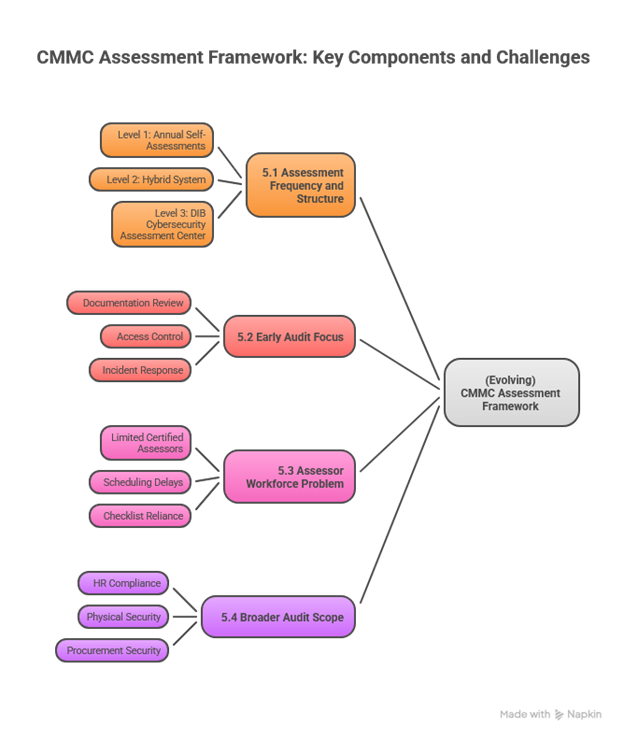
Figure: CMMC assessments evaluate compliance across technical and non-technical domains,
emphasizing verification over advisory remediation.
Scope discipline becomes a central determinant of assessment success. Over scoping increases exposure and evidence burden. Under scoping introduces risk when assessors identify assets or data that should have been included. Consistency between scope definition, documentation, and practice is essential.
CMMC 2.0 assessments are not punitive, but they are unforgiving. They enforce standards rather than guide improvement. Organizations that prepare accordingly tend to approach assessments as validation events rather than discovery exercises. Under CMMC 2.0, assessment outcomes reflect demonstrated reality, not explained intent.