
Article 1: CMMC 2.0 Is No Longer an IT Problem. It Is a Contract Eligibility Problem.
Series: Understanding the Business Impact of CMMC 2.0 (2025–2026)
For many years, cybersecurity compliance was treated primarily as a technical obligation. Organizations relied on self-attestation and deferred remediation, often without consistent verification. CMMC 2.0 represents a clear break from that approach. Cybersecurity certification is now a prerequisite for contract eligibility. When certification is required by solicitation or contract modification, organizations that cannot demonstrate compliance are not eligible for award.
Past performance and incumbency do not mitigate that requirement. CMMC 2.0 reshapes how organizations must think about ownership of cybersecurity. Revenue continuity, recompete viability, capture strategy, and executive accountability are now directly affected. Formal affirmations place responsibility at senior levels, increasing exposure when compliance claims are not supported by evidence.
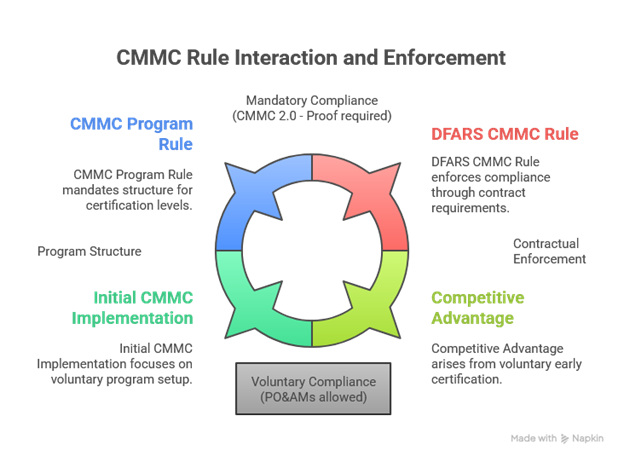
Figure: CMMC enforcement is achieved through the combined operation of
Program structure and DFARS contract clauses.
Verification is the defining feature of the CMMC model. Assessments require clear scoping, documented policies, and traceable evidence across technical and non-technical functions. Cybersecurity maturity must be observable and auditable.
Compliance extends beyond IT. Human resources, procurement, facilities, legal oversight, and executive governance all contribute to assessment outcomes. Organizations that fail to coordinate across these functions risk assessment findings even when technical controls are present. CMMC derives its authority from the interaction of the Program Rule and the DFARS Rule. Together, they transform cybersecurity from a planning objective into an enforceable contractual condition. Eligibility is determined at the time of award, not after remediation.
Organizations that treat CMMC as a business qualification requirement integrate certification into planning, budgeting, and governance. Organizations that treat it as a deferred technical task increase bid risk. In a contracting environment where eligibility is binary, that distinction has measurable consequences.